AgentDock: a controlled runtime for agent-driven system tasks
agentdock, developed by Uvwt, is a Model Context Protocol (MCP) server that provides a controlled runtime for AI agents. It lets agents execute code, edit files, run shell commands, manage Git repositories, and automate browsers without granting direct host access. The tool emphasizes containerized execution, persistent sessions, and multi-device orchestration. It is aimed at AI developers, system administrators, and power users who need safe, production-ready agent workflows.
What tasks can you actually use it for?
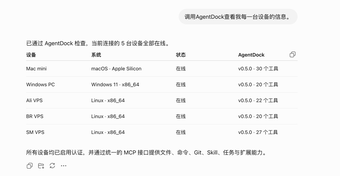
agentdock acts as a runtime where agents perform concrete system-level jobs rather than conversational tasks. In practice the server accepts agent requests and provides environments to run scripts, perform browser automation, edit project files, and carry out version control operations. Examples of supported tasks include automated Git commits, script execution inside containers, and programmatic file edits; these map directly to developer workflows that require elevated but controlled access.
How secure and predictable are agent executions?
Security is implemented by running agent actions inside isolated Docker containers, which prevents direct changes to the host operating system. Persistent sessions preserve environment state between interactions while container boundaries limit lateral effects. Security trade-offs remain operational: container configuration, image hardening, and orchestration settings determine actual isolation strength and must be managed by operators to maintain the intended protection model.
What inputs and environment does it require?
The server is a Go-based application that requires a Docker runtime and functions as an MCP server for compatible clients. Supported deployment targets include Linux and macOS, and Windows via Docker Desktop. Environment requirements therefore include a working Docker installation and network access for multi-device orchestration, which shapes where the tool can be deployed and how agents reach remote machines.
Does it fit into developer and operations workflows?
The design targets developers and system administrators who need controllable agent execution across local and remote machines. The open-source codebase supports customization and inspection, and multi-device orchestration lets teams coordinate tasks across a fleet of servers. Operational considerations include container lifecycle management, remote access configuration, and integration with existing CI/CD or monitoring systems to keep agent activity auditable and stable.
Practical choice for operator-managed agent deployments
agentdock suits developers and administrators who require a server-grade, inspectable runtime to let agents perform system tasks while retaining operational control. The tool’s open-source design and orchestration focus make it appropriate for deployment inside developer-managed environments; expect ongoing administrative work to configure containers, maintain images, and operate cross-device orchestration reliably. For teams prepared to accept that operational responsibility, it provides a clear path to safer agentic automation.